Most people think of dog grooming as a cosmetic service — a bath, a haircut, a tidy appearance. And while those things are certainly part of it, reducing grooming to aesthetics misses the point almost entirely.
Routine professional grooming is one of the most impactful things you can do for your dog’s long-term physical health. At A Dog’s Way Inn in Murrells Inlet, our grooming appointments are built around whole-body wellness — not just appearance. Here’s what’s actually happening during a professional groom, and why skipping it has real health consequences.
The Skin Beneath the Coat
The most important thing a groomer sees is what most pet parents never look at: the skin beneath the coat.
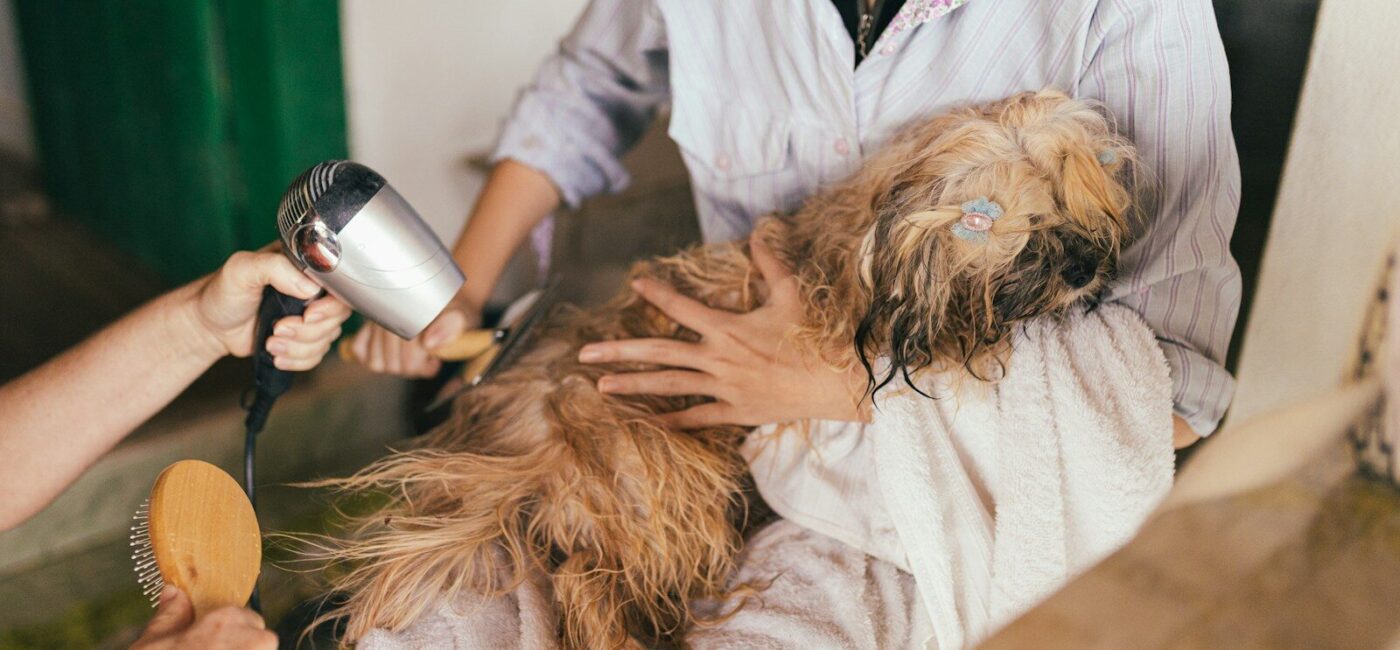
A dog’s coat, particularly a dense or long one, can conceal a significant amount of information about their health. Professional groomers are trained to examine the skin directly, and what they find shapes what they do next.
What Skin Examinations Reveal
Hot spots: Moist, inflamed patches of skin caused by bacterial infection — often triggered by allergies, insect bites, or trapped moisture beneath a matted coat. Hot spots escalate quickly and become painful. Caught early, they’re manageable. Left undetected under a thick coat, they can become serious infections.
Parasites: Fleas, flea dirt, ticks, and mites are often discovered during grooming before the owner has noticed any signs at home. Early detection is critical — an undetected flea infestation can reach hundreds of insects within weeks.
Lumps and masses: Groomers work with their hands across your dog’s entire body. Unusual lumps, bumps, or swellings that might go unnoticed during a casual pat at home are often found during a thorough grooming session. Many turned out to be benign lipomas — but some have warranted veterinary follow-up that made a real difference in outcomes.
Skin irritation and allergy indicators: Redness, scaling, thickening, darkening, or chronic moisture in skin folds are all signs of allergic or inflammatory skin conditions. In coastal South Carolina, environmental allergies are extremely common in dogs — and early recognition allows for earlier treatment.
At A Dog’s Way Inn, when our groomers find something concerning, they tell you. That information belongs to you and your veterinarian.
Ear Cleaning: The Most Overlooked Health Service
Ear infections are among the most common veterinary complaints in dogs — and they are largely preventable with consistent ear care.
Dogs with floppy ears (Basset Hounds, Spaniels, Doodles) are especially prone because the ear canal receives little airflow, creating warm, moist conditions that bacteria and yeast love. But even upright-eared dogs accumulate debris, wax, and moisture in the ear canal over time.
What Professional Ear Cleaning Accomplishes
- Removes accumulated wax, debris, and moisture that create infection conditions
- Allows examination of the ear canal for redness, odor, or discharge — early signs of infection
- Trims excess hair at the ear canal opening in breeds where hair growth blocks airflow
- Creates a regular inspection schedule so problems are caught early
Signs of an ear infection to watch for between grooming appointments:
- Head shaking or repeated ear scratching
- Redness or dark discharge visible at the ear opening
- Unpleasant odor from the ear
- Sensitivity when the ear is touched
- Tilting the head to one side
If you notice any of these, contact your veterinarian — and mention when your dog’s last ear cleaning was.
Nail Trimming: A Joint Health Issue
Overgrown nails are not merely an aesthetic problem. They are a musculoskeletal health issue that affects your dog’s gait, posture, and joint health — often in ways that accumulate quietly over time.
When nails grow too long, they make contact with the ground with every step. This forces the toes to splay outward and backward, subtly altering the mechanics of how the foot strikes the ground. Over time, this altered gait:
- Places abnormal stress on the toe joints
- Changes the alignment of the wrist, elbow, and shoulder
- Contributes to or accelerates joint pain in senior dogs with arthritis
- Can cause the nail to curve into the paw pad if severely neglected, causing painful wounds
Dogs who spend more time indoors — particularly in winter and on rainy spring days — don’t wear down their nails naturally the way outdoor-active dogs do. Regular nail trims at every grooming appointment prevent this cascade before it starts.
How often: Most dogs need nail trims every 4–6 weeks. If you can hear your dog’s nails clicking on hard floors, they’re overdue.
Coat and Mat Management: More Than Aesthetics
A well-maintained coat is not just attractive — it’s functional. Here’s what coat care actually does for your dog’s health.
Insulation and Thermoregulation
A healthy, well-groomed coat insulates properly in cool weather and facilitates heat dissipation in warm weather. A severely matted coat does neither — matts create dense, airless panels against the skin that trap heat in summer and prevent natural insulation in winter.
Skin Breathing
Skin needs airflow to stay healthy. Dense, matted fur traps moisture, dead skin cells, and debris against the skin surface, creating conditions for bacterial overgrowth, fungal infections, and chronic irritation.
Comfort
Matts pull on the skin constantly. Dogs with severe matting are in ongoing, low-level discomfort — and many become sensitive to handling as a result. Regular grooming prevents matts before they form, keeping your dog comfortable and handleable.
Dental and Hygiene Services
At A Dog’s Way Inn, our grooming appointments also include attention to hygiene areas that are easy to overlook:
Sanitary Trimming
Hair that grows around the sanitary areas can trap waste, moisture, and bacteria — leading to skin irritation, odor, and hygiene problems. Sanitary trims are a standard part of every appointment.
Paw and Pad Care
Paw pads crack and dry, especially in summer heat and on rough surfaces. Our groomers examine pad condition at every appointment and can apply conditioning treatments that keep pads healthy and comfortable.
Eye Area Cleaning
Breeds prone to tear staining (Maltese, Bichons, Shih Tzus, many white-coated dogs) benefit from regular cleaning of the eye area to prevent moisture buildup and skin irritation beneath the eyes.
How Often Should Your Dog Be Groomed?
A guide for Murrells Inlet pet owners:
| Breed / Coat Type | Recommended Interval |
| Short-coated breeds (Beagles, Boxers, Dalmatians) | Every 8–10 weeks |
| Medium-coated breeds (Labs, Golden Retrievers) | Every 6–8 weeks |
| Long-coated breeds (Shih Tzus, Maltese, Setters) | Every 4–6 weeks |
| Doodles and curly-coated breeds | Every 4–6 weeks — these coats mat quickly |
| Heavy shedders (Huskies, Shepherds, Corgis) | Every 6–8 weeks with seasonal deshedding treatments |
| Senior dogs | Maintain standard schedule — seniors are more prone to skin changes, nail overgrowth, and ear issues |
When in doubt, ask our grooming team. We’ll assess your dog’s coat and skin at your first appointment and recommend the right schedule for their specific needs.
Grooming as Partnership
The most effective grooming relationships are ones where the groomer and the pet parent work together — you share observations from home, we share observations from the appointment, and together you have a much clearer picture of your dog’s health between veterinary visits.
Think of routine grooming as a regular health checkpoint — not just a spa day.
📍 761 Pendergrass Ave., Murrells Inlet, SC 29576 📞 (843) 357-4545 🌐 adogswayinn.com
Schedule your dog’s next grooming appointment at A Dog’s Way Inn — Murrells Inlet’s trusted dog grooming services for whole-body pet wellness.