Dogs are extraordinarily communicative. The problem is that most of what they say doesn’t come in a form we’re trained to hear.
It doesn’t arrive as a complaint or a direct request. It arrives as behavior — behavior that gets labeled as bad, stubborn, anxious, or aggressive, when what it actually is, most of the time, is a message. A clear, consistent, increasingly urgent message that something in the dog’s life isn’t being met.
The gap between what a dog needs and what their daily life currently provides shows up in predictable ways. And once you know what to look for, those ways are surprisingly readable.
Here are seven of the most common signs that your dog is telling you they need more — more exercise, more social connection, more mental challenge, more professional care — and what each one is actually pointing toward.
Sign 1: They Destroy Things When You’re Gone
Coming home to chewed baseboards, gutted couch cushions, or an excavated trash can is one of the most frustrating experiences in dog ownership. It’s also one of the most misunderstood.
Destructive behavior in a dog’s owner’s absence is almost never spite. Dogs do not plan revenge. What they do is cope — and chewing, digging, and shredding are deeply satisfying physical and sensory outlets for a nervous system that has too much unspent energy and too little to engage with.
The behavior is not a character flaw. It is a math problem. Energy in, minus energy out, minus mental stimulation, equals what’s left over. What’s left over becomes your furniture.
What it’s pointing toward: Insufficient physical exercise, insufficient mental stimulation, or both. Dogs who have genuinely productive days — days where they run, play, interact, and think — don’t have surplus energy looking for an outlet.
What helps: Regular doggie day care is the most comprehensive solution for dogs with chronic destructive behavior. It addresses physical energy, mental stimulation, and social engagement simultaneously, and the results are typically visible within two to three weeks of consistent attendance. A dog who has spent the day at A Dog’s Way Inn comes home tired in the best possible way — and the couch survives.
Sign 2: They Lose Their Mind When They See Another Dog
Lunging, barking, spinning, or complete inability to function on a leash when another dog appears on the horizon is one of the most common behavioral complaints among dog owners — and one of the most commonly misdiagnosed.
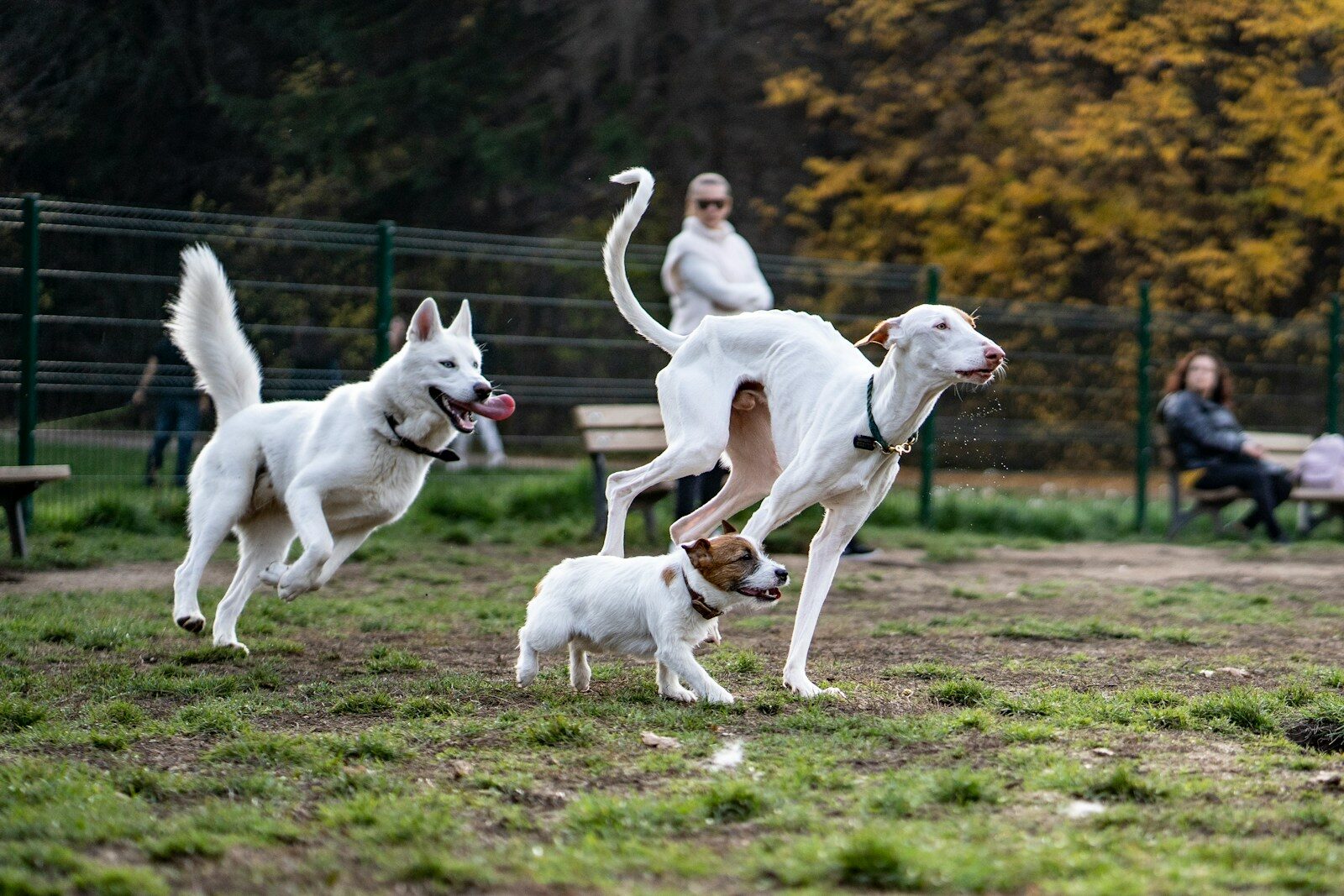
This behavior is frequently labeled as aggression. In the majority of cases, it isn’t. It’s frustration. It’s a dog who is so under-socialized, so rarely in close contact with other dogs, that the appearance of one triggers an overwhelming arousal response that the dog has no capacity to regulate.
Think of it as social starvation expressing itself as desperation. The intensity isn’t hostility — it’s need.
What it’s pointing toward: Insufficient regular socialization. Dogs who interact with other dogs frequently and positively — in supervised, well-matched environments — develop the social fluency to encounter other dogs calmly. They’ve seen this before. They know what to do.
What helps: Structured, supervised socialization through doggie day care or carefully managed group environments. The key word is structured — throwing an under-socialized dog into an unsupervised dog park can worsen reactivity. Professional supervision, thoughtful group matching, and consistent positive exposure over time is what moves the needle. At A Dog’s Way Inn, we conduct a meet-and-greet evaluation with every new dog precisely so we can build the right experience from day one, not just put them in a yard and hope.
Sign 3: Their Coat, Nails, or Ears Have Gotten Away From You
This one is quieter than the behavioral signs, but it speaks just as clearly about unmet needs — in this case, the need for consistent professional care.
A coat with mats forming behind the ears. Nails long enough to click audibly on hard floors. Ears with a faint odor that wasn’t there a month ago. These are not cosmetic issues. They are health indicators.
Mats trap moisture, restrict airflow to the skin, and create conditions for bacterial and fungal infections. Overgrown nails alter gait mechanics and place abnormal stress on joints — a problem that accumulates quietly and painfully over months. Ear odor is typically the first sign of a developing infection that will require veterinary treatment if not caught.
Most pet parents don’t deliberately let these things slide. Life gets busy. The grooming appointment that was always “on the list” didn’t get scheduled. And then three months pass.
What it’s pointing toward: A grooming schedule that isn’t keeping pace with the dog’s actual needs. In coastal South Carolina — where humidity, outdoor activity, and parasite pressure are significant year-round — professional grooming is health maintenance, not a luxury.
What helps: Establishing a regular professional grooming schedule at A Dog’s Way Inn and treating it with the same consistency as a veterinary check-up. For most dogs along the Grand Strand, that means a professional appointment every 4–8 weeks depending on coat type. Our groomers examine the skin, ears, paw pads, and nails at every appointment — and they tell you what they find.
Sign 4: They’re Anxious When You Leave — and Frantic When You Return
A dog who paces at the door as you prepare to leave, barks for extended periods in your absence, or greets your return with an intensity that takes 10 minutes to wind down is showing signs of separation anxiety — a condition that is far more common than most people realize and far more treatable than most people believe.
Mild separation anxiety is distinct from clinical separation anxiety disorder, which requires behavioral and sometimes pharmacological intervention. Mild forms — the dog who struggles with solitude but doesn’t injure themselves or destroy property systematically — often respond remarkably well to increased structure, social enrichment, and reduced isolation time.
What it’s pointing toward: A dog who is spending too much time alone and has not developed the coping skills and resilience that come from a full, structured life. Dogs with rich daily routines — consistent activity, regular social engagement, predictable schedules — handle alone time significantly better than dogs who have little else.
What helps: Regular daycare reduces isolation time and provides the daily structure that builds emotional regulation. A dog who knows what their day looks like — because it follows a predictable, active pattern — is a dog with a more stable nervous system. The anticipatory anxiety that builds in dogs who have learned that their days are empty and unpredictable begins to dissolve when the pattern changes.
Sign 5: They’re Bored — and Getting Creative About It
Not all boredom looks dramatic. Some of it is subtle: the dog who follows you from room to room and stares. The dog who barks at nothing for extended periods in the afternoon. The dog who has discovered that jumping on the counter produces interesting results. The dog who has taken to reorganizing the contents of the laundry basket.
Dogs who are sufficiently stimulated mentally and physically don’t need to invent entertainment. Boredom-based behaviors are a reliable indicator that the dog’s cognitive and sensory needs are not being met — and in many cases, physical exercise alone isn’t enough to address them.
Intelligence, in a dog, is not a passive quality. It is an active demand. Border Collies, Australian Shepherds, Poodles, Doodles, Belgian Malinois, and many mixed breeds have cognitive requirements that a daily walk and a backyard simply do not satisfy. For these dogs, mental under-stimulation is as uncomfortable as physical under-stimulation.
What it’s pointing toward: The need for enrichment — structured activities that engage the brain, not just the body. Nose work, puzzle feeding, training sessions, agility, varied environments, and social interaction all qualify.
What helps: A combination of at-home enrichment habits (puzzle feeders, training games, varied routes and environments) and professional enrichment through daycare and the activities available at A Dog’s Way Inn. Our agility training, dock diving program, and structured play sessions address high-drive dogs in ways that standard daycare alone doesn’t — and for dogs with real intelligence and drive, the difference is transformative.
Sign 6: They Seem Older Than They Are
This sign is perhaps the most heartbreaking — and the most overlooked.
A four-year-old dog who moves like a seven-year-old. A dog who was once playful who has become passive. A dog who used to initiate games and no longer does. A dog who sleeps more than seems right for their age, who seems mildly depressed in a way you can’t quite articulate, who just seems… less than they used to be.
This is sometimes a medical issue — and any unexplained behavioral or energy change warrants a veterinary check-up. But in the absence of a medical explanation, a dog who seems older than their years is often a dog whose daily life has contracted in ways that are aging them ahead of schedule.
Dogs who are regularly exercised, mentally stimulated, and socially engaged maintain their vitality longer. This is not anecdotal — it is consistent with what we understand about cognitive function, cardiovascular health, and behavioral health in social mammals. A life with sufficient challenge, connection, and movement is a life that ages more slowly.
What it’s pointing toward: A daily routine that has become insufficient for the dog’s health and vitality. Sometimes this happens gradually — a move, a change in work schedule, a shift in household activity level — and the dog’s contracted life goes unnoticed until the gap has been growing for months.
What helps: Honestly reassessing the dog’s daily routine against their actual needs. Then building back what’s missing — with regular exercise, professional grooming, social enrichment through daycare, and the kind of active, engaged life that quality dog care facilities exist to support.
Sign 7: Your Gut Has Been Telling You Something Is Off
This last sign is less clinical than the others, but experienced dog owners will recognize it immediately.
You know your dog. You know what their normal looks like — their energy level, their appetite, their social behavior, the look in their eyes when they’re happy versus when they’re not. And somewhere in the back of your mind, there has been a quiet, persistent sense that your dog is not quite at their best.
Not sick enough to call the vet. Not bad enough to feel like a crisis. Just… not quite right. A little dimmer. A little more restless. A little further from the dog you know they can be.
That instinct is worth trusting. And acting on it sooner rather than later almost always produces better outcomes than waiting for something more obvious to develop.
What it’s pointing toward: Whatever you already suspect. The answer is usually somewhere in the preceding six signs.
What helps: A conversation. If you’re not sure where to start, call us. We’ve worked with thousands of dogs and thousands of pet parents across the Murrells Inlet area, and we’re genuinely good at helping people identify what their dog needs — whether that’s boarding, daycare, grooming, training, agility, dock diving, or simply a place to run on the weekends.
One Facility. Every Answer.
One of the things that makes A Dog’s Way Inn genuinely different is that we don’t specialize in one service. We’re not just a boarding kennel, or just a groomer, or just a dog park. We are a full-service dog care facility — and that means whatever your dog is telling you they need, the answer is probably here.
Doggie Day Care for the dog who needs more activity, socialization, and structure during the day.
Professional Boarding for the dog who needs safe, enriching, professionally supervised care while you travel.
Dog Grooming for the dog whose coat, skin, ears, nails, and overall condition need consistent professional attention.
The Dog Park for the dog who just needs to run — 2 acres, fully fenced, open to the public 7 days a week.
Agility and Obedience Training for the dog whose intelligence and drive demand more than physical exercise alone.
Dock Diving for the dog who was born for the water and deserves to prove it.
Whatever sign you recognized in this post — your dog has been trying to show you something. We’re here to help you answer it.
📍 761 Pendergrass Ave., Murrells Inlet, SC 29576 📞 (843) 357-4545 🌐 adogswayinn.com
Hours: 7 Days a Week | 9:00 AM – 11:30 AM / 3:30 PM – 5:00 PM